American Civil War
Young Captain Jack · The Son of a SoldierThe American Civil War is more than the background to Young Captain Jack. It is the pressure that transforms domestic life into military duty, makes property and family vulnerable to armies and guerrillas, exposes the moral contrast between disciplined service and predatory violence, and drives Jack Ruthven from protected boyhood toward a soldier’s career. The war first appears as a force threatening the Ruthven household, but its final consequence is unexpectedly restorative: after defeat and suffering, it helps bring about the recovery of Colonel Stanton’s fortune, the revelation of Jack’s parentage, and a new family order at the plantation.
War Enters the Plantation World
The conflict reaches the Ruthven household through loss before it arrives through battle. Mrs. Ruthven is a widow because Colonel Martin Ruthven was killed at the Battle of Gettysburg, and his death leaves her physically weakened as well as responsible for Marion Ruthven and Jack. The children are deeply affected by the loss, while Mrs. Ruthven clings to them as her chief consolation. The plantation itself is a large mansion set back from the river on one of the richest plantations in South Carolina, so the war threatens not merely a family residence but an entire social and economic world.
The military advance steadily narrows the distance between the front and Oldville. Confederate forces are pushed back until they are encamped less than four miles from Jack’s home; for two days, cannon fire can be heard distinctly, and the local women fear that Federal troops will descend upon their houses and pillage them. The general store in town also registers the material effects of the conflict. Lemuel Blackwood’s once-crowded establishment has been reduced to a scanty, shop-worn stock, and wartime disruption has nearly destroyed his trade. The war therefore appears in both spectacular and ordinary forms: as artillery approaching across the countryside and as scarcity inside a civilian marketplace.
Mobilization and Civilian Defense
The war awakens in Jack an eager but initially romantic desire for military life. He has repeatedly spoken of enlisting as a drummer boy, imagining the glory of soldiering without considering its hardships and suffering. Mrs. Ruthven refuses to let him go, insisting that one death in the family is enough, and Marion’s attachment to him makes departure nearly impossible. His military formation consequently begins at home rather than in the regular army.
As the danger approaches, Jack and Darcy Gilbert organize a Home Guard company of boys. The company has twenty-three members, with Jack as captain; the boys possess pistols or guns, while Jack carries an old sword and a pistol. Their arms are limited, but the organization gives the young defenders a public responsibility and a concrete answer to the threat surrounding the plantation. Jack’s self-reliance is already evident in his refusal to be intimidated by men who try to browbeat him, and wartime emergency converts that personal courage into command.
When cannon fire again draws toward the homestead, Jack takes a spyglass to the roof to determine what is happening and then prepares to defend the household. Nineteen members of his company assemble, each with a loaded gun or pistol, and form an imposing line. The episode also reveals the war’s dependence on improvised local action: the plantation’s defense is not provided solely by distant armies but by boys, household servants, and civilians responding to immediate danger. Old Ben openly displays his long, old-fashioned pistol and promises to protect Jack, while Jack answers with gratitude and a pledge that he will not forget Ben if he grows up and becomes rich.
Armies, Hospitals, and Irregular Violence
The Ruthven mansion becomes a temporary field hospital when the battle reaches its vicinity. Confederate stretcher-bearers bring three badly wounded soldiers to the house because they can carry them no farther. Mrs. Ruthven immediately agrees to receive them, summons the servants, and orders cots prepared on the lower floor. More wounded men follow, until six Confederates lie in the sitting room. A young surgeon treats them while Mrs. Ruthven and Marion assist, turning a domestic interior into a place of emergency medicine and humanitarian duty.
The household’s danger is intensified by the uncertain boundary between military movement and lawless opportunism. A Federal cavalry troop passes the homestead without stopping, but it is followed by guerrillas described as followers of every army who fight chiefly in order to loot afterward. Their captain, Sandy Barnes, orders his men toward the house, and Jack draws his company across the lawn. The contrast is central to the novel’s wartime ethic: disciplined soldiers may pass without violating private property, while irregular fighters use the confusion of war as an opportunity for plunder.
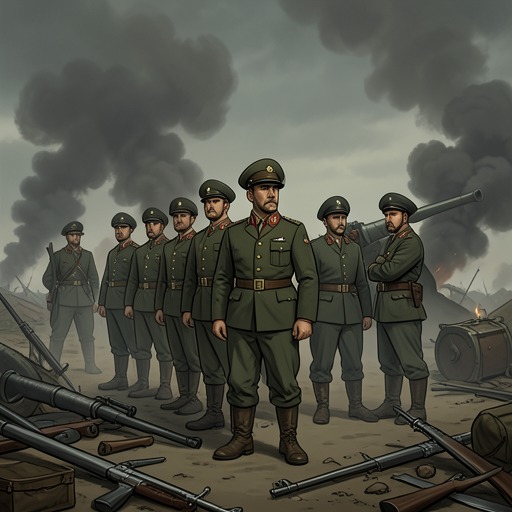
The arrival of Colonel Stanton’s Federal regiment further complicates the household’s political and emotional position. The regiment camps nearby, causing initial alarm throughout the neighborhood, but Colonel Stanton is a strict disciplinarian who does not tolerate pilfering. Once his conduct becomes clear, the inhabitants grow calmer. His military authority therefore protects civilians even while his uniform identifies him with the advancing enemy. The war repeatedly tests whether loyalty to a cause must entail contempt for persons, homes, or the wounded, and Colonel Stanton’s discipline offers a counterexample to the looting associated with the guerrillas.
Loyalties, Cowardice, and Hidden Histories
The conflict exposes different meanings of service. Harry Powell, a surgeon and Mrs. Ruthven’s nephew, has moved to Philadelphia, become thoroughly opposed to slavery, and joined the Federal troops as soon as the war begins. His decision horrifies his Southern relatives, but his conduct and personal courage win general respect. Marion compares him favorably with St. John Ruthven, whose craftiness, cowardice, and self-indulgence make him an emblem of inherited privilege without moral strength.
St. John’s relation to the war is shaped by pressure rather than conviction. After a quarrel with his mother, who insists that he overcome his cowardice and do something for his country, he offers his services to Confederate headquarters as a civilian rather than as a soldier. His response contrasts sharply with Jack’s voluntary readiness to defend the plantation and with Harry’s commitment to Federal service. The war thus becomes a test of character as well as allegiance, distinguishing action undertaken at personal risk from the evasions of a man concerned chiefly with appearance and comfort.
The war also unsettles claims of ownership and identity. St. John learns that Mrs. Ruthven intends to leave Jack half the property, and the information shocks him because family wealth has become inseparable from his own declining economic position. His plantation is already nearly worthless after his spendthrift habits and neglect, while the Ruthven estate remains valuable. In this setting, wartime danger, inheritance, and social rank converge: military crisis threatens property, but property also motivates private schemes and resentments.
Defeat, Revelation, and Aftermath
The military balance repeatedly reverses. A force of Federal soldiers eventually appears near the Ruthven plantation, compelling the Confederate army to retreat into the mountains and the valley beyond. Marion calls the reversal a victory swallowed up in defeat, yet the arrival of the Federal side carries a private hope because it may bring Harry Powell back. Her concern for his safety and her admiration for his courage reveal how the war has made political division coexist with personal attachment.
For Jack, the conflict produces direct captivity and danger. He is held in a small cabin high on the mountainside, bound tightly behind him to a heavy wooden stake driven into the mud floor. The scene strips away the excitement of youthful military imagination and replaces it with thirst, hunger, isolation, and helplessness. War is no longer a banner or a command but a bodily condition imposed on a prisoner.
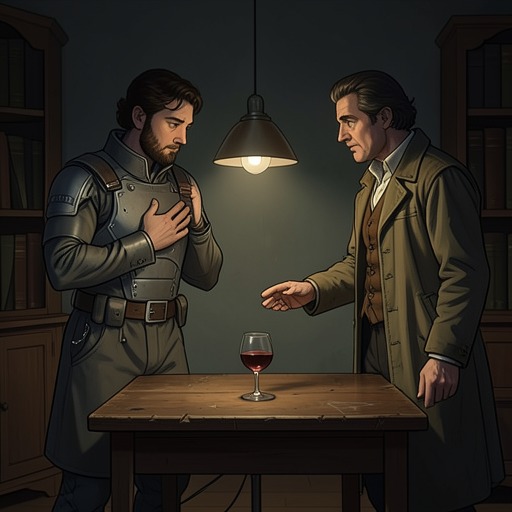
Yet the same wartime chain of events leads to the revelation that resolves the novel’s central identity mystery. Colonel Stanton, wounded during the conflict, reveals that Jack is not Dr. Mackey’s son but his own son. The war has brought the two into the same narrative and made the hidden past impossible to preserve. Once the evidence is accepted, Jack’s disputed parentage becomes a confirmed father-and-son relationship, and the conflict’s personal violence is followed by recognition and recovery.
When Colonel Stanton slowly recovers, the American Civil War comes to an end. He resigns from the army and prosecutes Dr. Mackey, who receives a ten-year prison sentence. Colonel Stanton and Jack then obtain the fortune due to them, valued at one hundred and fifteen thousand dollars. The family remains at the plantation because Mrs. Ruthven cannot bear to part with Jack, and a year later Colonel Stanton marries the widow, making her once again Jack’s mother. The postwar settlement is completed by a double wedding: Marion marries Harry Powell, while St. John is absent and subsequently loses his plantation through continued extravagance.
Historical and Narrative Significance
The war’s final transformation is visible in Jack’s career. Years later, he enters West Point Military Academy, graduates with high honors, and goes West as an officer at a well-known fort. His daring and loyal service lead him to the rank of colonel. The boy who once longed for the imagined glories of a drummer’s life therefore becomes a trained professional soldier, but the completed arc joins military achievement to the responsibilities first learned while defending his family home.
The novel presents the American Civil War through a social field wider than the battlefield. Armies retreat and advance, but so do families, fortunes, identities, and moral judgments. The plantation becomes a hospital; boys become defenders; a Federal officer protects Southern private property; a surgeon’s political conviction crosses the lines of kinship; and a prisoner’s suffering precedes the discovery of his true father. Through these reversals, the war is represented as a material and ethical force that exposes the weakness of inherited rank while rewarding courage, loyalty, disciplined service, and care for the vulnerable. Its conclusion does not erase the losses of Gettysburg or the violence of captivity, but it converts a divided wartime world into a postwar family joined by truth, marriage, and a future shaped by responsible service.